Behold, to obey is better than sacrifice…
1 Samuel 15:22
The Protestant/Catholic divide is old and wide-ranging. Among the many issues of disagreement is the idea of worship. What is Christian worship? Are Protestants wrong for attending a praise-and-worship service? Is the Catholic Mass the highest or truest form of Christian worship? Do Catholics worship Mary?
While much ink has been spilled over the past five centuries arguing over these questions and many more, it is still important and worthwhile to continue to take clear, biblical stances on these crucial theological issues in our own day, for people of our time. The apostle Paul exhorted his spiritual protégé Timothy to preach the Word, because a time was coming when people would turn away from the truth to follow myths.
That was true in Paul and Timothy’s day, it is true in our day, and it will continue to be true until the Lord returns. Therefore, we must never become lazy or grow tired of teaching the truth. This is true in all areas of doctrine, but especially so in the case of worship. We were created to worship God; we had better make sure we get it right.
So, what is worship? According to Roman Catholicism, worship is broken down into three categories they call dulia, hyperdulia, and latria.¹ Dulia is the type of “honor” or worship paid to saints or angels; hyperdulia is the “veneration” or worship given to Mary, the mother of Jesus alone; and latria is the highest form of worship, which is reserved only for God. While worship is described in many ways in Scripture, which we have detailed here, the distinction the RCC makes is with regard to sacrifice. The claim is that while prayer, singing, fear, and all other avenues of worship can be offered to saints, angels or Mary along with God, true worship—or the highest worship, that which is reserved for God alone—requires sacrifice. This is displayed primarily through the Eucharist, where the man or woman joins in Christ’s sacrifice in worship to God.
Now, as with all things pertaining to doctrine and theology, we must go to the Scriptures to see what God teaches. When we do, what we see regarding true worship is not what the RCC claims it to be. There are two places we need to look. The first is a principal teaching from the New Testament. The second is a primary example from the Old Testament.
First, let us look at the principal teaching from the New Testament. This comes from Paul’s letter to the Roman church. It reads: “Therefore I exhort you, brothers, by the mercies of God, to present your bodies as a sacrifice—living, holy, and pleasing to God, which is your spiritual service of worship” (Romans 12:1). The word translated “spiritual service” in the LSB is λογικός, which the ESV, KJV, and others translate as “reasonable,” whereas the CSB translates it “true,” and the NIV says “true and proper.” According to Paul, our reasonable—or true and proper—worship to God is self-sacrifice. Paul explains this further in his letter to the Galatian churches (Gal. 2:20), when he states that he has been crucified with Christ and that Christ now lives in him. Of course, Paul did not literally die; rather, he fully submitted himself to Christ as Lord and became obedient to His commands. That was a life of true worship, and this is what brings pleasure to God.
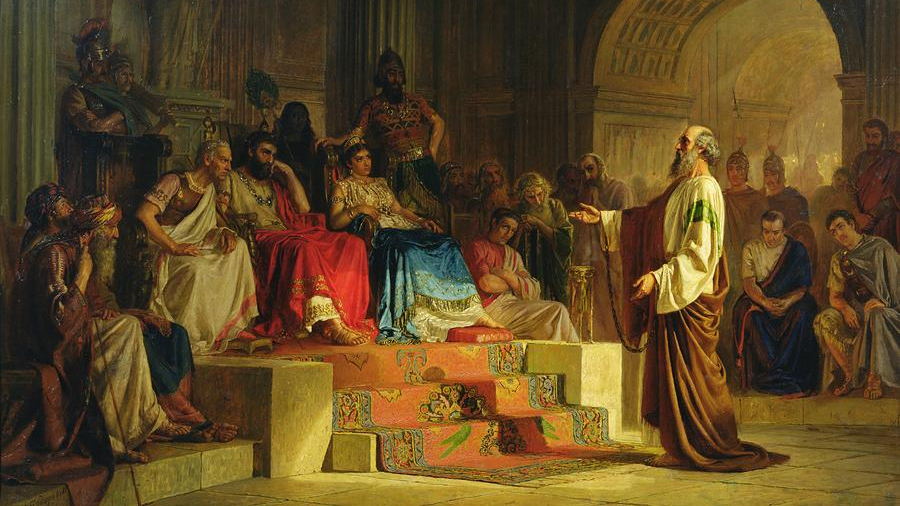
Paul states the principle in Romans, but this was not a new teaching. We see a clear example of this truth in the Old Testament when the prophet Samuel confronted King Saul. This is the second text we need to examine. It reads:
“Then Saul said to Samuel, ‘I did obey the voice of Yahweh and went on the way on which Yahweh sent me, and I have brought back Agag the king of Amalek and have devoted the Amalekites to destruction.’ But the people took some of the spoil, sheep and oxen, the choicest of the things devoted to destruction, to sacrifice to Yahweh your God at Gilgal. And Samuel said, ‘Has Yahweh as much delight in burnt offerings and sacrifices as in obeying the voice of Yahweh? Behold, to obey is better than sacrifice, and to heed than the fat of rams. For rebellion is as the sin of divination, and insubordination is as wickedness and idolatry. Because you have rejected the word of Yahweh, He has also rejected you from being king.’” (1 Sam 15:20-23)
Samuel states as clearly as possible that God desires obedience above sacrifice. Sacrifice cannot be the highest form of worship if God desires something above it. Samuel further elaborates by linking insubordination with idolatry, and insubordination is simply another word for disobedience. One does not need an extensive theological education to know that God hates idolatry.
From these two passages—and from many others that further reinforce this teaching—we can see that true worship to God is not sacrifice itself, but submission and obedience. With this understanding, we can say that, at the very least, the lines are blurred in how Roman Catholicism handles Mary in relation to God. As a first example, consider the Prayer of Consecration to the Immaculate Heart of Mary, which states: “We consecrate ourselves and our families to your Sorrowful and Immaculate Heart, O Queen of the Most Holy Rosary…” It continues, “Please accept our consecration, dearest Mother…” and further down, “O Sorrowful and Immaculate Heart of Mary, Queen of the Most Holy Rosary and Queen of the World, rule over us, together with the Sacred Heart of Jesus Christ, our King.”
A prayer asking Mary to rule over someone is a prayer of submission and obedience to her authority. That is biblical worship. As a second example of this blurring of lines, consider those who wear the Brown Scapular. According to CNA, the fifth of twelve keys to using the Brown Scapular states: “‘Just as men are proud that others wear their uniform, so Our Lady, Mother Mary, is pleased when her servants wear their scapular as proof that they have dedicated themselves to her service and that they are members of the family of the Mother of God.’”²
Calling oneself a servant of Mary, devoted to her service, sounds very much like submission and obedience. When worship is properly understood—not as sacrifice, but as submission and obedience—it becomes clear that the Roman Catholic claim of veneration rather than worship is a distinction without biblical warrant.
The point, however, is not merely to highlight the errors of Roman Catholicism, but to encourage Christians that true worship of God is not found in the Mass or in joining Christ in His sacrifice. True worship flows from a life of submission to Christ’s lordship and obedience to His commands. It is not confined to a building and does not require a priest. True worship is offered every moment of every day, in every circumstance, as we sacrifice our thoughts, actions, and even our lives. No one is worthy of that kind of devotion and obedience but Christ alone.