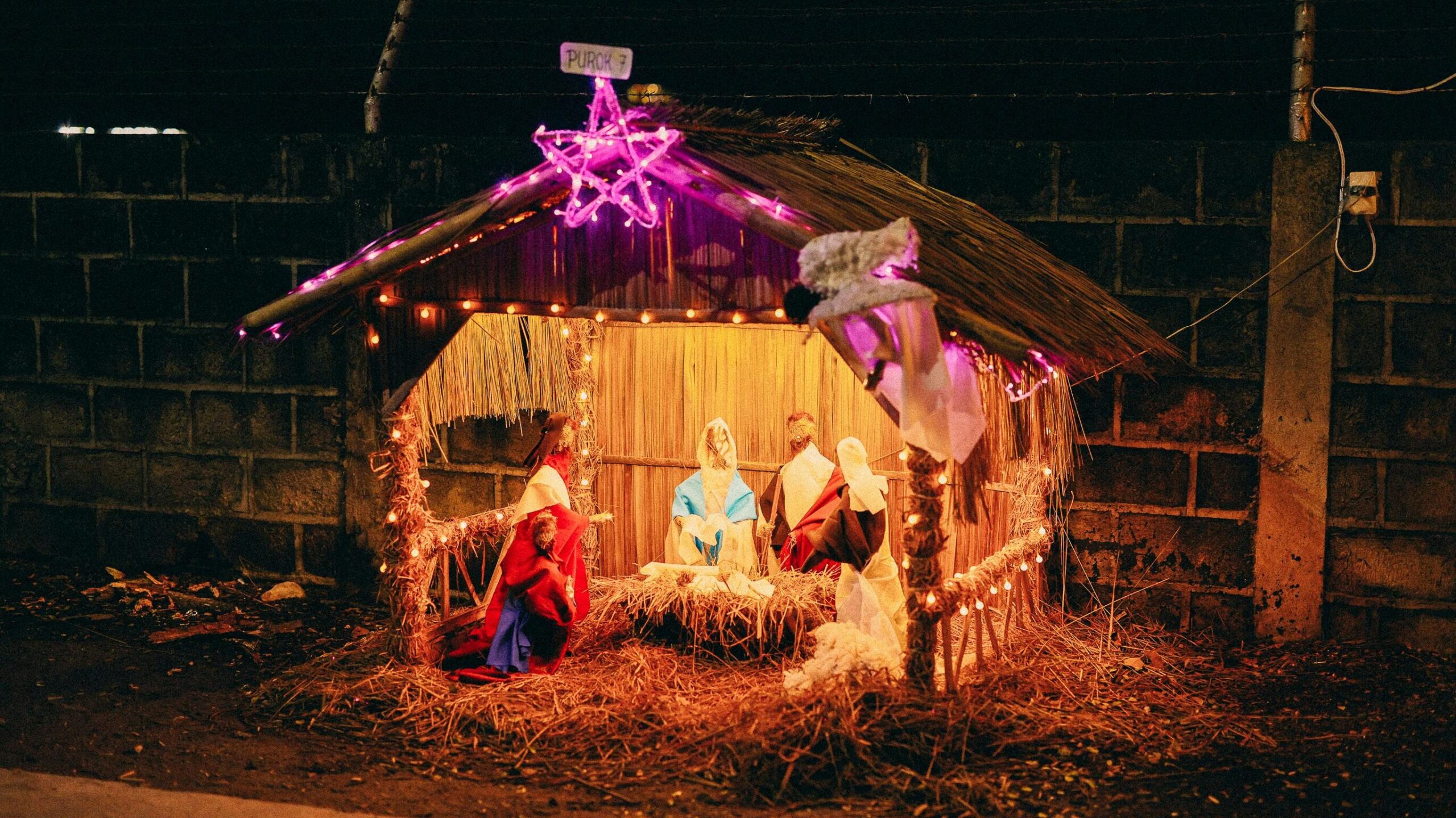
Why Do And Why Should Christians Celebrate Christmas?
This is a discussion that comes up every year, and one Christians are either forced to defend or forced to retreat from. So, why do we celebrate Christmas and maybe a better question, why should we? My hope here is not to give the most exhaustive, academic recounting of the history of Christmas, but simply to help believers understand that Christmas is Biblical and historical, and we should celebrate it with joy and not be persuaded by those who seek to distort this important holiday. Let’s start with the first and most important reason to celebrate, the Biblical witness.
As with all things in a Protestant Christian faith, Sola Scriptura is of the utmost importance, and therefore without a Biblical foundation, even Christmas would be hard to justify. So, let’s discuss what the Biblical foundation is for our celebration of Jesus’ birth. For this, we need to turn first to Luke’s gospel, chapter two. On the night of Jesus’s birth, an Angel of the Lord appeared to a group of shepherds in a field nearby Bethlehem and where Mary gave birth. The Angel of the Lord announced the birth of the Savior and was then joined by a heavenly host praising God. After the fear had left the shepherds, they headed off to Bethlehem to see this child. The shepherds were the first people, along with a Heavenly host, on the day of Christ’s birth to celebrate His coming and worship Him. You can read this story in Luke 2:8-21.
Next, we must go to Matthew’s Gospel, chapter two and read of the next celebration. Here we see the arrival of wise men from the east. These men, whom we know little about, were led by a star in the sky and followed it to Bethlehem to see the newborn King and offer gifts of gold, frankincense, and myrrh. You can read this story in Matthew 2:1-12.
So, according to the Bible, on the night of Jesus’s birth, he was celebrated and praised by angels and shepherds, and shortly after his birth, He was worshipped by wise men, who came presenting gifts. And it’s important to note that both groups are spoken of highly and not chastised for their celebration or worship. These men were commended and their faith encapsulated in scripture for all-time. So, while Christmas is not specifically command to be celebrated in the Bible, we see that those who celebrate the birth of Christ are to be commended. It’s a good thing to celebrate the birth of the Messiah.
In addition to specific Biblical evidence of Jesus being celebrated and worshipped at His birth, we also have Biblical evidence of Jesus celebrating festivals not specifically commanded by God. In John 10:22-23, we read of Jesus going to the temple during the time of the Feast of Dedication, which we know today as Hanukkah.
This feast dates to the intertestamental period and the Maccabean revolt, between 167 – 160 B.C. A group of Jewish fighters overthrew their pagan rulers, the Seleucids, and then re-dedicated the temple after it had been tarnished by pagan rituals. Jesus attended this feast established to commemorate this event and saw no problem with joining in the celebration, even though it was not commanded by God to do so. If Christ Himself can celebrate feasts not commanded by God but are in-line with true faith and worship, then we should see no problem in doing the same.
So biblically, Christians have good ground to stand on when it comes to celebrating Christmas, but we also have history on our side. And while this is where most of the complaints about Christmas come from, we should not be dissuaded. Let’s look briefly at the history of Christmas in the Christian church.
The first and most important thing for us to understand with regards to the history of Christmas is that there are no ancient church writings detailing a borrowing of pagan tradition to celebrate Christ’s birth. It wasn’t until the 12th century that the idea of choosing the day to celebrate Jesus’s birth had anything to do with pre-established pagan feasts.
Church fathers as early as Clement of Alexandria, writing in the late 2nd or early 3rd century were already trying to determine the date of Christ’s birth. And while the dates proposed varied, the reason they settled on December 25th had to do with when they believed Jesus was conceived and died, and not pre-existing pagan festivals.
Around the year 200 A.D. Tertullian reported that the date of Jesus’s crucifixion fell on March 25th (Nisan 14), the same day in which the early churched believed he was conceived by the Virgin Mary. December 25th was exactly nine months after March 25th and therefore that was the date which they believed Jesus to be born.
Now, why they believed Jesus had to be conceived on the same day as his death might have been due to an idea known today as “integral age,” which suggests that ancient Judeo-Christian cultures believed great prophets or holy men lived perfect spans of time, therefore they had to die on the same day they were born, or conceived. Therefore, if Jesus died on March 25th, he had to be conceived on March 25th and so, December 25th as the date of His birth made sense. It certainly wasn’t the most scientific or Biblical reason for choosing a date, but it also wasn’t driven by paganism.
Then there is the nature of the specific festivities that accompany Christmas. These were later developments and certainly have changed overtime. And while we can see some parallels to pagan festivities, that likely has more to do with human expression than Christians seeking to co-opt pagan rituals. To say that Christmas has pagan roots because we use a tree, is a silly as saying that it has pagan roots because we sing, or dance. Pagans sang and danced in their festivals, but that’s because singing and dancing are human expressions of joy and celebration. Evergreen trees were symbols of life and renewal for example. Some throughout the history of the church did try and redeem pagan temples and festivities, but this was much later, after Christmas began being celebrated.
Early Christians were far more interested in separating themselves from their pagan civilizations, even to the point of dying for their faith, then they were concerned with blending in. So, while traditions may have been adopted and added in throughout the centuries, it’s likely this has more to do with basic human expressions of celebration then it does trying to resemble paganism.
Christmas is a wonderful holiday, fully in-line with Christian faith. Our Lord was celebrated and worshipped at His birth, and He still deserves to be worshipped today. Everyday should be a day we remember, celebrate and worship God for what he did to redeem mankind, and therefore any day, even if the dates are arbitrary, is a day we should joyfully celebrate and worship.
Two last things in closing. You will likely hear that the Bible speaks against having Christmas trees and whoever brings this up will mention Jeremiah 10:3-4. These verses are not warnings against putting a Christmas tree up in your house, that would be absurd. These verses are warnings against graven images or carved idols that were worshipped as false Gods. No one is worshipping Christmas trees, and this is a wonderful, but terrible, example of taking scripture out of context.
And the last thing I will mention in support of celebrating Christmas is Christian unity. While Easter may be a more important holiday in actuality, in practice, Christmas is the most widely celebrated and recognized Christian holiday. It is a wonderful time of Christian unity and fellowship centered on Christ our King. Unity is of the utmost importance in the church and so for the sake of unity and fellowship with the body, I encourage all to celebrate this wonderful holiday.
Don’t allow unbelievers to tell you how to practice your faith and don’t allow skeptics to tarnish the legacy of our church and the faithful men and women who came before us and brought us these wonderful traditions. Sing a carol, be charitable and give a gift. Christ has come and we can be sure He will come again. God bless!