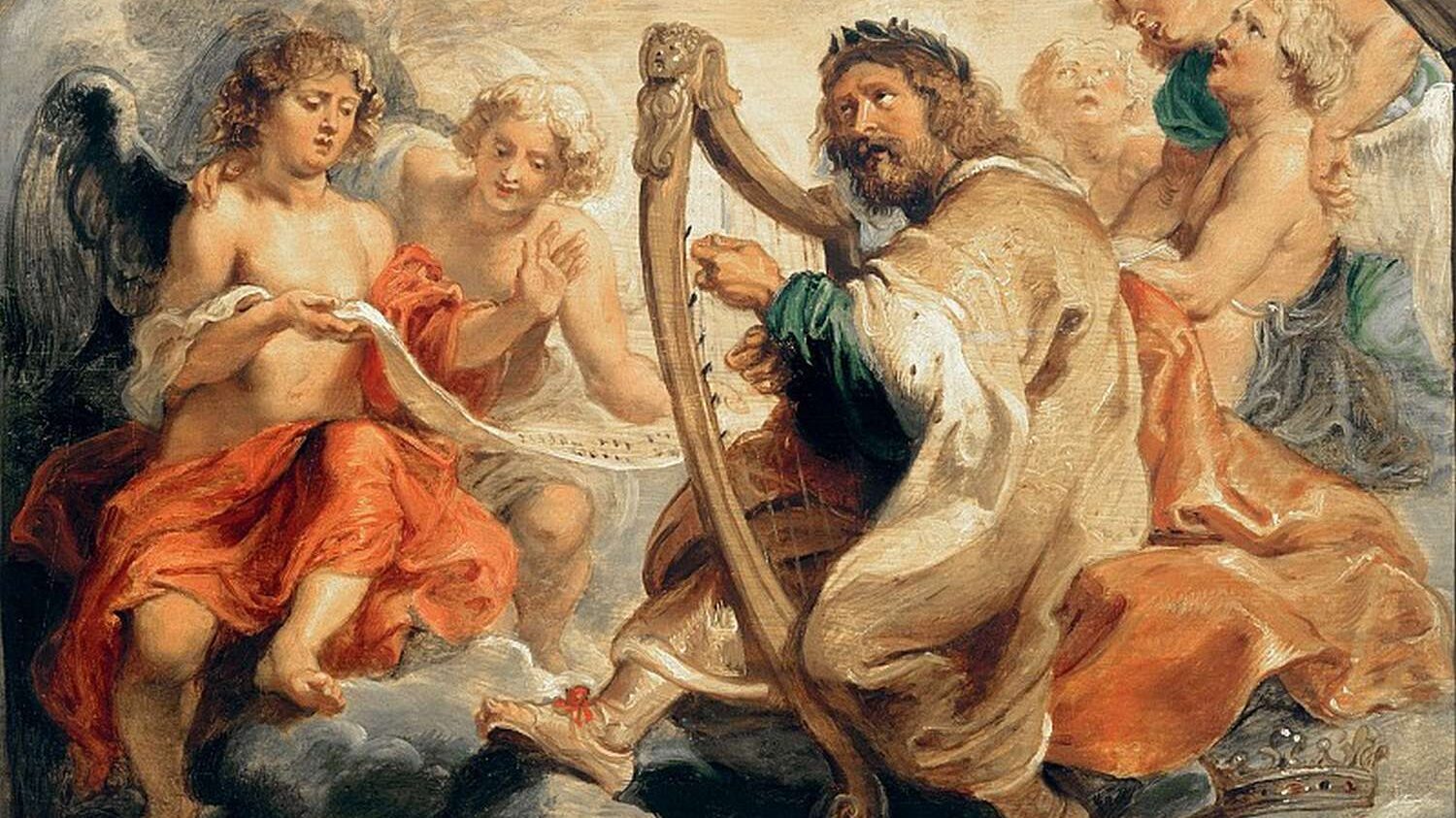
Come, let us worship and bow down,
Let us kneel before Yahweh our Maker.
Psalm 95:6
What is Worship
According to J.I. Packer, “worship is the due response of rational creatures to the self-revelation of their creator.”1 In effect, it’s what we were made to do, and what we should be doing when our hearts and minds aren’t overly burdened by the effects of sin. God, by His very nature is wonderful, glorious, almighty, and amazing. Words that we throw around a lot in our culture, but that actually fit the description of who God is. And not only is God those things, but He is also loving, gracious, and attentive to us—His creation. For these reasons and many more, worship is the right response, but what is it?
Before we define it, let’s look to the Bible and see what it has to say. Worship is spoken of in both the Old and New Testaments. In the OT, we have three Hebrew words used for worship. The first one, seg-eed’1 (סְגִד), which is from saw-gad’ (סָגַד) and it means to prostrate oneself, or fall down in homage. Secondly, we see the Hebrew word aw-tsab’2 (עָצַב) which can mean many things; displease, grieve, hurt, make, be sorry, vex, wrest, but also it means worship as it does in Jeremiah 44:19. Thirdly, we see the word, shaw-khaw’3 (שָׁחָה), which is the most commonly used of the three and it, like saw-gad’ (סָגַד), means to depress or prostrate oneself, to bow down, crouch or fall, all in homage to royalty or God.
In places like Deuteronomy 4:19 and 30:17, worship is linked to being driven or compelled to serve. In Joshua 5:14, we see worship as falling on your face in prayerful submission. In 2 Kings 17:36, we see worship and sacrifice linked. However, in 1 Samuel 1:3 we see that they aren’t always connected, and can be separate acts. We see in places like Psalm 66:4 that worship is connected with singing, it’s even linked to eating in other places like Psalm 22:29. We know that worship is to be done in the Temple and in the Synagogues, but in Zephaniah 2:11, we see that worship will be done everywhere, each their own place.
These are just a few references, covering a few aspects of worship as described in the OT. The point is to show that worship involved many aspects, or maybe better said all aspects of a true believer’s life. Whether you were eating, drinking, singing or dancing, full of joy or full of fear, at home or in the Temple, worship could and should be given to God. J.I. Packer again says that it is “honoring and glorifying of God by gratefully offering back to Him all the good gifts, and all the knowledge of His greatness and graciousness, that He has given.”
While much more could be said about worship in the OT, let’s move forward and see how it’s described in the NT. Here again, many verses could be used, but only a few are necessary to get the gist of the NT understanding of worship. First, let’s look at which words are used for worship.
The most common word used is the Greek word dox’-ah5 (δόξα). It can speak of someone’s dignity or something’s gloriousness, but also honoring, praising or worshipping. While this word is overwhelmingly translated as “glory,” it is occasionally translated as praise, honor, or worship (at least in the KJV).
Next we have the word latreuō6 (λατρεύω) which is to minister, or render religious homage. It can also, and most often does, mean to serve, do service, or worship. In Acts 7:42 for example, it is translated, “worship” in both the KJV and ESV.
The next two words we see used are both used very seldomly, and share a very similar meaning, they are ethelothrēskeia7 (ἐθελοθρησκεία) and eusebeō8 (εὐσεβέω). Both words speak to the idea of being pious or showing piety as a form of worship. Paul used this word when he spoke to the Athenians about their worship of the Unknown God in Acts 17:23.
Lastly, we see the word proskuneō9 (προσκυνέω) which speaks to prostrating oneself in homage or reverence, to adore or worship. This is the word used most often to speak directly to someone or something being worshipped or someone worshipping.
We see worship being offered right from the beginning of the NT, in Matthew 2:11, when the wise men fell down, or prostrated themselves and offered gifts in worship to Jesus at His birth. So both the act of prostrating themselves, which signifies submission to another, and giving of gifts as a way to honor are acts of worship.
Later in Matthew 4:9 we see Satan demanding Jesus worship him in a similar fashion, telling the Lord to fall down before him in worship. Satan was looking to be worshipped through Jesus’s submission. The act of willful submission and acknowledging ones authority over you is worship.
When speaking to the woman at the well in John 4:23, there Jesus told us that true worshippers will worship God in Spirit and in truth. That is to say, true worship to God is not found in ceremony, or outward expression, but it comes from the inward man, the spiritual being and is grounded in the truth of who God has revealed Himself to be in His word.
And this verse in John 4:23 really gets to the meat of what NT worship is. It is submission and obedience to God. In Matthew 4:9-10 Jesus directly connects worship and service in response to Satan. Which makes sense when we see in Hebrews 1:6, even the angles worship Christ. Angels exist for the purpose of serving God and man. We see this idea also in Revelation 4:10 when the twenty-four elders fall down before God, casting their crowns at His feet. That is total submission. That is worship.
So, the best way to really bring this whole idea of worship together from the OT to the NT, Paul taught in Romans 12:1, where he wrote, “I appeal to you therefore, brothers, by the mercies of God, to present your bodies as a living sacrifice, holy and acceptable to God, which is your spiritual worship.” (ESV)
Worship to God is our willful submission to His authority and willful obedience to His commands and this is to be done in all things, all areas of our life. Our entire being should be tuned towards joyful submission and obedience to God. John MacArthur wrote, “Worship consists of ascribing to God the honor that He is due, declaring His glory both in words of praise and through acts of obedience.”10
When we are singing with joy for all that God has done for us through Christ Jesus, that is true worship. When we are crying out for faith to remain submissive to God’s will and obedient through trials, that is true worship. Even when we are thanking God for our provision, that is true worship as we know God supplies all our needs.
The only sacrifice that is needed in true worship is your life. Paul described this sacrifice in his letter to the Galatian churches in Galatians 2:20, writing, “I have been crucified with Christ. It is no longer I who live, but Christ who lives in me. And the life I now live in the flesh I live by faith in the Son of God, who loved me and gave himself for me.” (ESV) With that spiritual understanding, you can then do as Paul implored us to do, present our bodies as living sacrifices.
Worship is what men were made to do, and when we are living sacrificial lives, submitting to God, obeying His commands, we are fulfilling our great purpose on this earth. God is not only exalted and glorified through the worshipful lives of His children, but His children are living their lives to the fullest when they are sacrificing their lives in worship to God.
- J.I. Packer Concise Theology Pg. 114
- Strongs Concordance H5457
- Strongs Concordance H6087
- Strongs Concordance H7812
- Strongs Concordance G1391
- Strongs Concordance G3000
- Strongs Concordance G1479
- Strongs Concordance G2151
- Strongs Concordance G4352
- John MacArthur Essential Christian Doctrine Pg. 394